A First Visit to an Unfamiliar Match
A first visit to an unfamiliar match feels easier when you choose one thing to watch, use the scoreboard for bearings, and leave room to observe.
A first visit to an unfamiliar match gets easier when you stop trying to understand everything at once. Choose one thing to watch, use the programme or scoreboard to keep your bearings, and leave a little attention for the crowd. You do not need to know every rule before you take your seat.
The point is not to pass as a lifelong supporter. It is to give the game a shape you can follow, then let the venue supply some of its own context. That approach works at a baseball ground, a basketball arena, a cricket oval, or a smaller community venue where the traditions may be less obvious.
What should you watch first?
Pick one visible thread that can hold your attention through the action. It might be a player, a position, a recurring contest, or the way a team tries to move the ball or object into a dangerous area. A single thread is easier to follow than a running attempt to decode every whistle, substitution, and tactical choice.
Choose something with a clear visual cue. In soccer, you could watch how a fullback responds when an opposing winger receives the ball. In baseball, follow the pitcher’s approach to one hitter. At a swim meet, track how a particular race unfolds from the start to the finish rather than trying to learn every event at once.
There is no need to choose the most important player or the most complicated tactical feature. A goalkeeper’s positioning, a point guard’s decisions, or the changing space around a runner can offer plenty to notice. If the thread stops making sense, switch to a simpler one without treating that as failure.
Say you arrive at a volleyball match knowing only that teams send the ball over a net. You might watch the setter’s hands and notice how that player directs the next attack. The observable result is a more coherent view of each rally: you can see a decision being made before the ball crosses the net, even if you are still learning the finer rules.
How can the programme or scoreboard orient you?
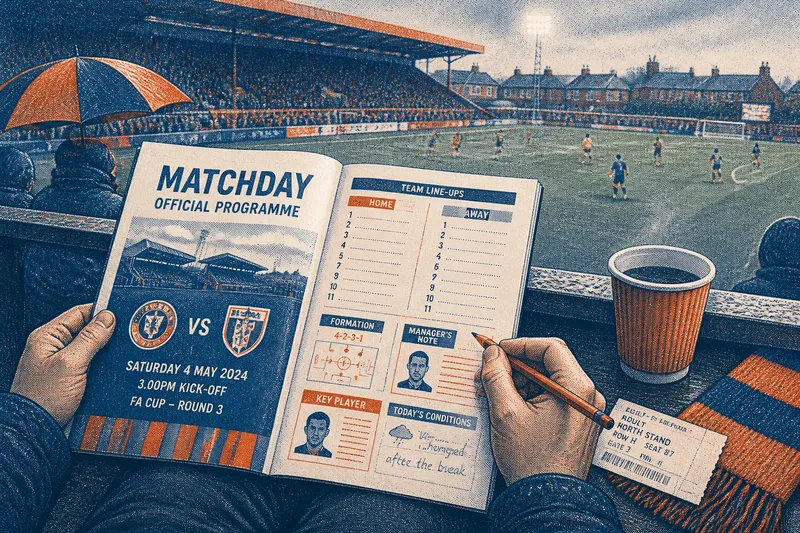
A programme is useful as a reference, not a textbook. Look for the teams’ names, starting lineups, positions, event order, or a short explanation of the format. Those details help attach names and roles to what is happening, but there is no need to read every page before play begins.
If the programme uses abbreviations, focus on the parts that answer an immediate question. A lineup can tell you who is on the field; an event schedule can show what comes next; a brief rules note can clarify how a round or period ends. Leave unfamiliar terminology alone until it becomes relevant. A glossary read in advance may turn into a pile of words with nothing visible to connect them to.
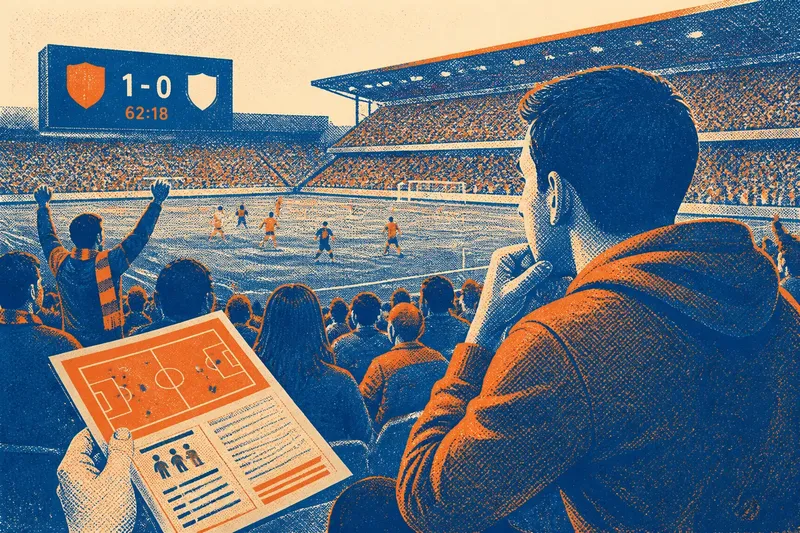
The scoreboard gives a different kind of orientation. Start with the score, the period or inning, and any clock or count that the sport uses. These are the game’s landmarks: they show where the contest stands and how much of its current phase remains. At a meet or tournament, the display may instead list a heat, event, lane, or round.
Read the display in relation to the action, not in isolation. A close score can make a late possession feel different from an early one; a count in baseball changes the immediate tension of an at-bat. If the board includes unfamiliar abbreviations, check the programme or ask a nearby fan during a pause rather than guessing at every symbol.
Some venues keep the display spare, while others fill it with sponsor panels, animations, and secondary information. You can ignore anything that does not help answer three basic questions: who is involved, what phase is underway, and what just changed? That small filter keeps the scoreboard from becoming another performance to study.
What should you notice about the crowd?
The crowd is part of the match’s social setting, and its customs often make more sense through observation than explanation. Notice when people stand, clap, sing, fall quiet, or turn their attention toward a particular part of the venue. A repeated response may mark a familiar moment, but it may also be a reaction to the score, a player, or an event unfolding off the main field.
Start by watching the people nearest you rather than assuming every section behaves alike. Supporters behind one goal may sing while families in another area stay seated. A student section might respond to a cue from a band or announcer, while a crowd at a smaller match may applaud a good play from either side.
There is no obligation to join in before you understand what is happening. You can smile, clap when the reason is clear, or simply watch. If a chant includes words you do not know, listening for a round first is a comfortable way to learn its rhythm without taking attention away from the game.
Look for the less dramatic customs, too. People may applaud a departing player, make room for someone returning to a seat, or pause to let a nearby spectator see an important moment. These gestures can tell you how people share the venue, not just how they support a team.
Some behavior is tied to local expectations, and the same gesture can mean different things in different sports or settings. Keep your response modest until you have a feel for the room. If a custom seems unclear, a quiet question during a break is usually more useful than copying a loud reaction without context.
How do you make the visit comfortable?
Check the venue’s entry information before setting out, especially if you are carrying a bag or planning to bring food. Entry policies and accessibility arrangements vary, so the venue’s own directions are more useful than assumptions based on another arena. Knowing where your gate or section is can leave you with more attention for the match itself.
Once inside, take a moment to locate the scoreboard, the nearest exit route, and a place to get water or use the restroom. That is not a call to spend the whole visit managing logistics; it simply lets you settle without having to scan the building during a tense passage of play. If you need to move, wait for a natural pause where possible.
Pick a seat or viewing spot that suits how you want to watch. A high seat may make the formation or movement easier to see, while a lower one may bring the pace and physical detail closer. Neither view is the correct one. The best choice for a first visit is the one that helps you follow your chosen thread without straining to catch every detail.
It is not worth the effort to memorize the full rulebook, learn every player’s name, or imitate every crowd ritual before arrival. Those tasks can make a relaxed outing feel like an exam. A small amount of orientation is enough to give the game a foothold; curiosity can do the rest.
What questions help you settle in?
Should you learn the rules before arriving?
Learn only the basic shape of the sport if you want a little preparation: how a team scores and what ends a period, inning, or event. The match itself will show you which details matter most, and you can look up a specific rule if it becomes a question.
Is it awkward to ask another fan what is happening?
A short question during a break is normal in many settings, especially if you ask about the moment on the field rather than requesting a full explanation of the sport. Try, “Why did the crowd react to that?” or “What does the board’s count mean?” A willing fan can often give you a quick point of reference.
Do you have to support one of the teams?
No. You can follow a player, enjoy the tactics, or simply see how the contest develops. If a team’s style or crowd catches your interest, you may find yourself leaning that way, but there is no need to decide in advance.
What if you lose track of the action?
Look at the scoreboard for the current phase, then find the ball, player, or active area again. If the play has moved on, let the next sequence become your fresh starting point rather than trying to reconstruct every detail you missed.
How can you leave with a sharper sense of the match?
Near the end, notice whether your original thread still interests you. Perhaps you followed one player, or perhaps the crowd’s responses became more compelling than the tactics. Either is a useful discovery: it tells you what made the unfamiliar match feel legible without requiring a grand verdict on the sport.
On the way out, you might ask a companion what moment stayed with them, or check the programme for a name you heard repeatedly. Keep the question small and concrete. “Why did that substitution matter?” gives a conversation somewhere to go; “Did I understand the whole match?” sets an unnecessary standard.
A first visit to an unfamiliar match is most rewarding when it leaves room for surprises. Keep one eye on your chosen thread, use the display to recover your bearings, and let the crowd reveal its habits at its own pace. The next time you visit, you can bring one new question rather than a complete set of answers.