Why the Matchday Programme Became a Keepsake
A matchday programme can guide you through a fixture and preserve its small details, turning a paper souvenir into a vivid record of the occasion.
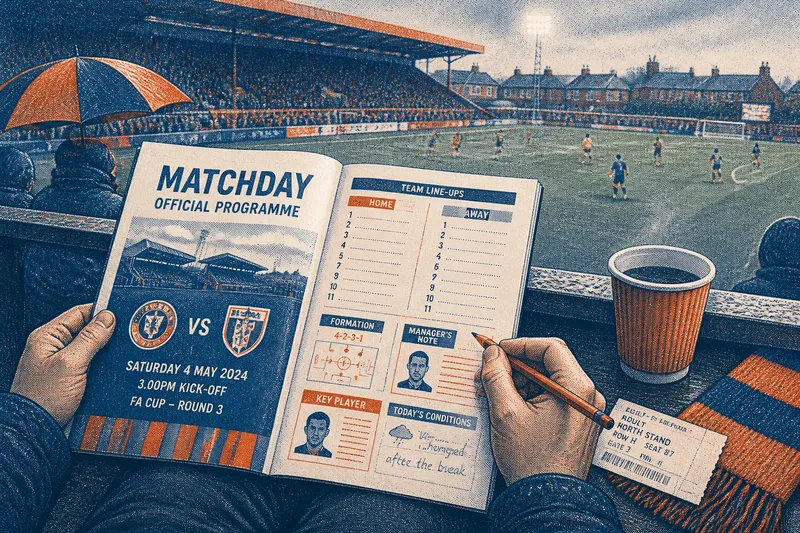
A matchday programme earns its place in a coat pocket by doing two jobs at once: it helps a spectator make sense of the fixture, then carries home details the scoreboard cannot keep. The matchday programme is more than a player list; its paper, annotations and little bits of context make the day easier to remember.
What does a programme tell you before kickoff?
At the simplest level, the programme identifies the sides, the competition and the people expected to take part. A squad list is useful, but its real value is often in the links around it: a player’s position, a short profile, a manager’s note, or a reminder of how the teams reached this fixture.
Those details give a spectator something to look for. A name on the team sheet becomes easier to place when the programme mentions a recent role change or a route into the first team. The page does not need to predict what will happen; it offers a few handles for watching.
Fixture information can also settle practical questions without requiring a phone search. The venue name, kickoff time, competition format and any printed changes to the schedule help orient someone who has just arrived. If the programme includes a ground map or a seating guide, it can be useful to check it before folding the paper away.
Look for the publication date or fixture date if the programme has been bought in advance. A postponed match or a late team change can leave printed details out of step with the day. That mismatch does not make the object worthless, but it can explain why a listed player never appears.
Which details turn a fixture into a record?
A keepsake preserves the texture of an occasion, not just its result. The cover design, paper stock, sponsor marks and club colors place it in a particular setting, while a date or competition name ties it to one match rather than an entire season.
Inside, small editorial choices can be especially evocative. A note about a community initiative, a youth team, a ground anniversary or a visiting side’s style of play records what the club thought deserved attention that day. Years later, such pieces can say as much about the matchday atmosphere as the scoreline.
There is also the physical record made by the reader. A folded corner might mark the lineup; a brief note beside a substitution can capture a moment the final result leaves vague. Treat those marks as part of the object’s story, not damage to be corrected. If you want a pristine copy, keep one unmarked and use a second for notes.
Say you attend a rainy cup tie and jot “wind changed after the break” beside the team sheet. The programme now holds a detail that a results page is unlikely to preserve, and the note may bring back the conditions when you look at it later. Keep the observation short and specific; a whole match report is unnecessary.
How can you read a programme during play?
Use it as a reference rather than a script. Before the action begins, scan the lineup and identify a few names or roles you want to follow. During a pause, check a profile or competition note, then put the paper away before the next phase of play.
Printed formations and tactical descriptions can help explain a team’s intended shape, but they describe a starting point, not a promise. Players move, roles change and coaches adjust. Watching the match first and consulting the page during a break keeps the printed account from becoming a substitute for what is happening in front of you.
Not every page deserves attention. If a long advertisement or generic feature has no bearing on the fixture, skip it; there is little value in reading every line just because it is printed. The programme works best when it answers a question you actually have.
What should you keep, mark or store?
Choose what kind of memory you want the programme to hold. A clean copy preserves the design and print quality; a working copy can carry a date, a few notes or a ticket stub tucked inside. Neither approach is more authentic. The useful choice is the one that suits how you revisit sporting memories.
- Keep the cover visible: Record or retain the fixture date and competition so the programme can be identified later.
- Mark only what you will understand: Write a player’s role, a memorable substitution or a short note about the conditions, rather than an unexplained symbol.
- Store ticket stubs separately or loosely: Avoid pressing adhesive onto printed pages, where it can leave residue or tear the paper.
- Keep paper flat and dry: A folder or archival sleeve can help protect a copy from damp, sunlight and repeated handling.
- Make a quick digital record if needed: A clear photograph of the cover and lineup can help you identify a copy without handling it often.
For a large collection, group programmes by club, season or competition and add a simple index. A small label on the folder is easier to revise than writing directly on a cover. For a few favorite fixtures, a box with a brief note attached may be plenty.
What do collectors look for in a matchday programme?
Collectors often care about a programme’s connection to a specific occasion, but condition is only one part of that connection. A clear cover, complete pages and a legible lineup make the object easier to identify; handwritten notes, a correction slip or a ticket tucked inside may add personal meaning for its original owner.
Keep context with the paper. If you remember where it came from, write that information on a separate card or in a collection index rather than guessing later. A programme without a readable date can be hard to place, especially when a club reuses a design or a fixture has been rescheduled.
Do not assume that age alone makes a copy remarkable. Its importance depends on the club, match, edition and the interests of the person keeping it. For a family collection, a routine home fixture attended together may matter more than a famous cup tie.
Which matchday programme details are worth checking?
Does a programme include the final score?
Some editions leave space for a result or include a match report later; others are printed before the game and never record the outcome. If you want the score attached to the paper, add it in pencil after the match or keep a separate note with the fixture details.
Can a team sheet differ from the printed lineup?
Yes. Late changes, injuries or tactical decisions can make the announced team differ from the names printed earlier. Treat the programme as a snapshot of the expected selection and use any official matchday update for the current lineup.
Why do some programmes feel more personal than others?
Local references, club voices and handwritten observations connect the publication to a particular crowd and occasion. A generic fixture list can still orient you, but a note about the supporters’ section or a club’s community work gives the paper a more specific sense of place.
How should you preserve a signed programme?
Keep it flat and dry, and avoid rubbing or adding tape over the writing. If the signature matters to you, handle the page by its edges and store it away from bright light; for valuable or fragile paper, ask a paper conservator for suitable preservation advice.
Why keep the paper after the result is known?
A result tells you who won; a programme can remind you what you noticed before the outcome was clear. It preserves names you learned, a feature you read at halftime and the design the club chose for that fixture. Those ordinary details are often what make a sporting memory feel located rather than abstract.
That is why a useful matchday programme need not be rare, lavish or complete with every insert. Keep the copy that helps you recall the occasion, note enough context to recognize it later, and let the rest remain a record of what the club put into the hands of its crowd that day.